Yes, you can vape CBD, and for many people seeking fast-acting relief, it’s one of the most effective delivery methods available. When you inhale CBD through a vaporizer, the compound enters your bloodstream through the lungs, bypassing the digestive system entirely. This means you’ll typically feel effects more quickly than with edibles or tinctures, though the exact timing varies from person to person based on factors like your metabolism, the concentration of CBD you’re using, and your individual body chemistry.
The catch? Not all CBD products are created for vaping, and using the wrong kind can be ineffective or even harmful. CBD oil tinctures, designed for oral use, should never go into a vape device. Instead, you need CBD vape juice or specialized cartridges formulated specifically for inhalation. Understanding this distinction is essential before you make a purchase.
If you’re transitioning from smoking or simply exploring alternatives to manage stress, discomfort, or sleep issues, vaping CBD offers a smoke-free option that many find fits naturally into their routine. But like any wellness decision, it requires honest information about what works, what doesn’t, and what to watch out for.
This guide walks you through the mechanics of CBD vaping, helps you identify quality products, and addresses common questions about safety and effectiveness. You’ll learn how to choose the right device, what ingredients to avoid, and how to determine whether this method aligns with your goals. No hype, no unverified promises, just the practical knowledge you need to decide if CBD vaping is right for you.
What Happens When You Vape CBD
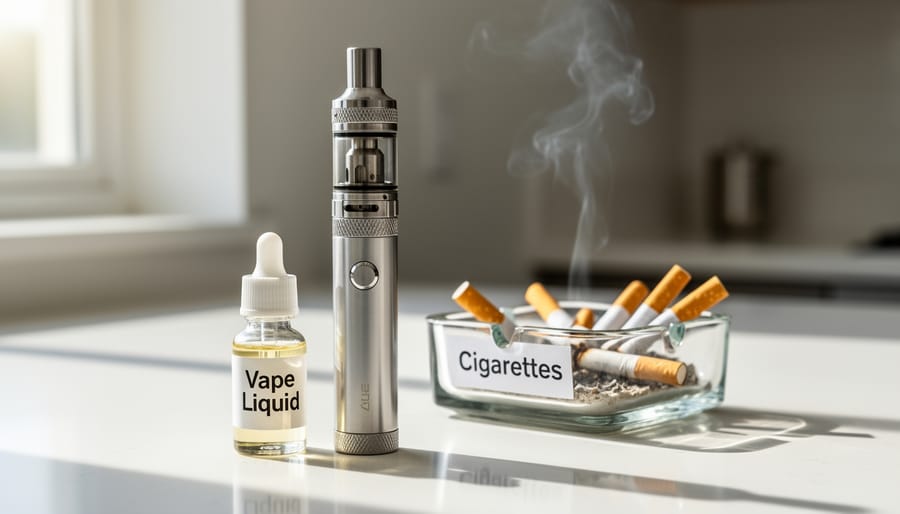
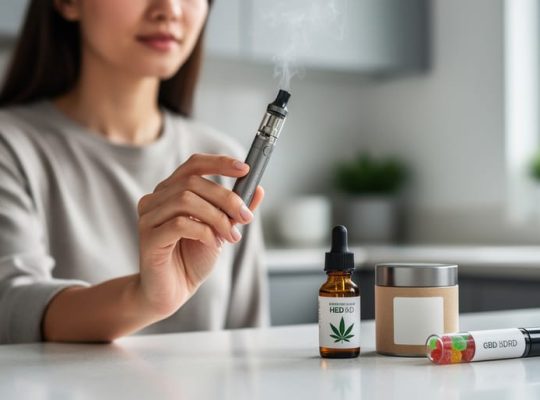
When you vape CBD, you’re heating a specialized liquid until it turns into an inhalable vapor. Your vaping device contains a heating element that warms the CBD vape liquid to a temperature high enough to vaporize it, but not hot enough to burn it. This creates a mist you inhale into your lungs, where the CBD absorbs through the delicate tissue in your airways and enters your bloodstream.
This process differs fundamentally from smoking in several ways. Smoking burns plant material at much higher temperatures, creating smoke filled with combustion byproducts and potentially harmful compounds. Vaporization operates at lower temperatures, producing a vapor that contains CBD and the liquid’s base ingredients without the tar and many of the toxins associated with burning. There’s no combustion happening, which is why vapor looks lighter and dissipates more quickly than smoke.
People often notice effects more quickly with vaping compared to other CBD methods like edibles or tinctures taken under the tongue. When you swallow CBD products, they travel through your digestive system before entering your bloodstream, which takes time. Inhalation bypasses this lengthy digestive process, allowing CBD to reach your system more directly through lung tissue.
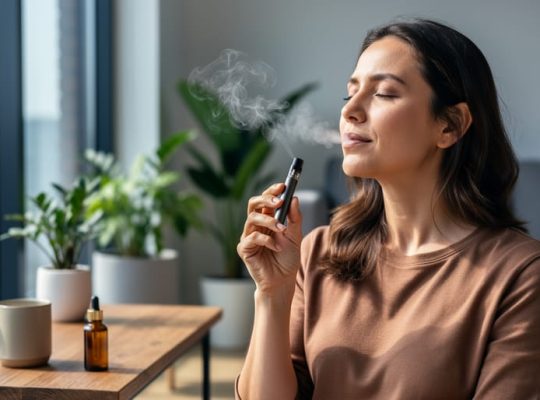
The experience itself is fairly straightforward. You inhale the vapor into your lungs, hold it briefly, then exhale. Most people describe the sensation as smoother than smoking, though those new to any type of inhalation may experience some throat irritation initially. The vapor typically has a milder taste than smoke, and many CBD vape products include natural flavorings.
Why do people choose this method? Speed matters to some users who want to feel effects sooner rather than waiting. Others appreciate the familiarity of the inhalation ritual, especially those transitioning from smoking cigarettes or cannabis. Some simply prefer it to swallowing capsules or holding oil under their tongue. The choice often comes down to personal preference, lifestyle, and what feels most natural to the individual.
CBD Oil vs. CBD Vape Liquid: Understanding the Difference
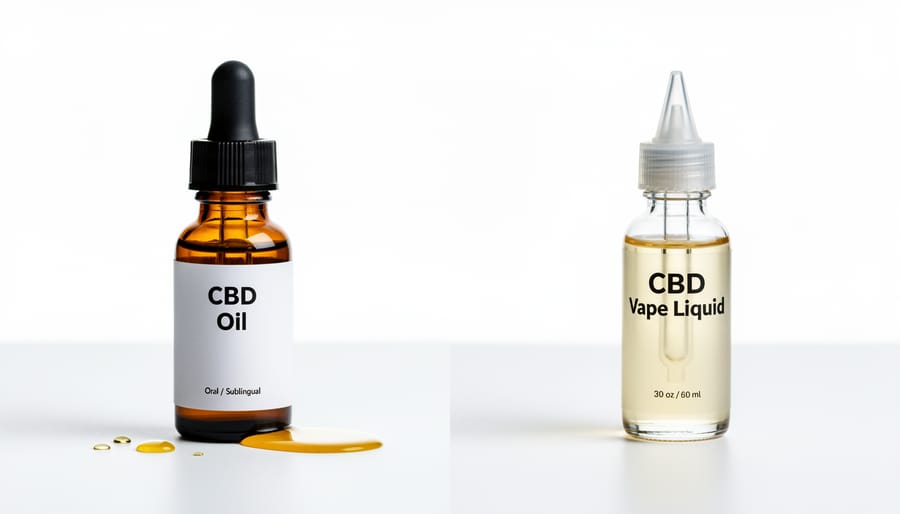
The confusion between CBD oil and CBD vape liquid causes more problems than you might expect. Using the wrong product isn’t just ineffective, it’s potentially dangerous.
Standard CBD oil tinctures are designed for oral consumption. These products typically contain CBD extract suspended in a carrier oil like MCT oil, hemp seed oil, or olive oil. You place drops under your tongue, hold them there briefly, and swallow. These oils work perfectly for their intended purpose, but they should never be heated and inhaled.
When you heat standard oils to vaping temperatures, they don’t vaporize cleanly. Instead, they can produce harmful byproducts and create a coating in your lungs that your body struggles to clear. Oil droplets in lung tissue can lead to serious respiratory issues. This isn’t a minor concern or manufacturer overcaution, it’s basic biology. Your lungs evolved to process air, not oil vapor.
CBD vape liquid uses completely different base ingredients. Proper vape juice relies on propylene glycol and vegetable glycerin, the same compounds used in nicotine e-liquids for years. These substances vaporize cleanly at typical vaping temperatures and don’t leave problematic residues in your respiratory system.
| Category | CBD Oil (Tincture) | CBD Vape Liquid |
|---|---|---|
| Intended Use | Oral/sublingual consumption | Inhalation via vaporizer |
| Base Ingredients | Carrier oils (MCT, hemp seed, olive oil) | Propylene glycol and vegetable glycerin |
| Safety for Lungs | Dangerous when heated and inhaled | Formulated to vaporize safely |
| Typical Application | Drops under tongue, held then swallowed | Inhaled through vape device |
The packaging should clearly state whether a product is meant for vaping. Look for terms like “vape juice,” “e-liquid,” or explicit statements about inhalation use. If a label mentions carrier oils or says “tincture,” it’s not for vaping, regardless of the CBD concentration listed.
Some manufacturers try to blur these lines with unclear marketing. A bottle might prominently feature CBD content while burying the fact that it contains oil. This ambiguity isn’t accidental, it’s either sloppy labeling or deliberately misleading. Either way, it puts you at risk.
When you’re shopping, read the full ingredient list. If you see any kind of oil listed, that product stays out of your vape device. Period. Reputable vape liquid manufacturers understand the stakes and formulate products specifically for inhalation safety. They test their formulations and provide transparent ingredient lists because they know the difference matters.
Getting this right isn’t complicated once you know what to look for, but the consequences of mixing them up can be severe. Your lungs deserve better than improvisation.
Who’s Making the Switch and Why
People explore CBD vaping for surprisingly varied reasons, and understanding these motivations helps clarify why this delivery method resonates with different individuals.
Former nicotine vapers represent a significant group making the switch. Many have successfully quit nicotine but miss the familiar ritual of vaping itself, the hand-to-mouth motion, the inhalation, the brief pause in their day. CBD vaping offers a way to maintain that routine without reintroducing nicotine. Some report that the ritual alone provides stress relief, while others find CBD’s properties complement their wellness goals. The transition feels natural because the devices and techniques are already familiar.
Another common motivation comes from people already using CBD who find other delivery methods inconvenient or inconsistent with their needs. Tinctures work well for many, but they require holding liquid under the tongue and waiting, which isn’t always practical. Edibles can take an hour or more to take effect. For someone managing stress before a presentation or seeking quick relaxation after a difficult commute, vaping offers faster onset that fits specific situations better.
Wellness-focused individuals often turn to CBD vaping as part of broader lifestyle changes. Someone reducing alcohol consumption might use CBD vaping during social situations where they previously drank. Others incorporate it into meditation practices or wind-down routines. Athletes and fitness enthusiasts sometimes explore it for post-workout recovery support, though research in this area remains limited.
The stories that emerge share common threads: people seeking control over their wellness routines, looking for alternatives that fit their lives rather than dictating them. A teacher might vape CBD between classes to manage workday stress. A former smoker might use it to address lingering habitual triggers years after quitting cigarettes.
What unites these different motivations is intentionality. People aren’t stumbling into CBD vaping; they’re making deliberate choices based on their specific circumstances, previous experiences, and what they hope to achieve. Understanding your own reasons helps determine whether this method makes sense for you.
What to Look for in CBD Vape Products
Quality CBD vape products don’t announce themselves with flashy packaging or inflated promises. They demonstrate their worth through documentation and transparency.
Start with third-party lab reports. Every legitimate CBD vape product should have recent test results available, either through a QR code on the package or the manufacturer’s website. These certificates of analysis verify CBD content, confirm the absence of THC (or accurate levels if present), and screen for contaminants like heavy metals, pesticides, and residual solvents. If a company makes you hunt for this information or doesn’t provide it at all, move on.
The ingredient list tells you everything about what you’re actually inhaling. Quality vape liquids typically contain CBD extract, propylene glycol, vegetable glycerin, and sometimes natural flavoring. That’s it. Watch for unnecessary additives, artificial colors, or vague terms like “natural hemp extract” without specifics. The sourcing matters too, look for CBD derived from organically grown hemp with clear origin information.
Recent industry changes have pushed better manufacturing standards, but enforcement varies. Reputable manufacturers follow Good Manufacturing Practices and will state this clearly. They also provide clear information about CBD concentration per milliliter, allowing you to understand exactly what you’re getting.
Warning signs appear in what companies don’t say. Vague health claims, impossibly low prices compared to market standards, and mysterious ingredient lists all signal problems. Companies that sell both compliant vape products and maintain transparency typically invest in quality control because their reputation depends on it.
Check customer reviews, but read them critically. Look for detailed experiences rather than generic praise. Industry forums and Reddit communities often provide honest discussions about product quality and company reliability.
Your device matters too. CBD vape products work best with devices designed for their viscosity and formulation. Some products specify compatible device types, which shows attention to user experience.
The reality? Good CBD vape products cost more than questionable ones because quality ingredients, testing, and compliance aren’t cheap. If a deal seems too good, it probably involves corners you don’t want cut when you’re inhaling something into your lungs. Your research time up front prevents disappointment and potential health concerns down the line.
Getting Started: Practical Considerations
Starting with CBD vaping doesn’t require complicated equipment or extensive preparation. Most newcomers choose between two basic device types: refillable pod systems that let you select your own CBD e-liquid, or pre-filled disposable vape pens that come ready to use. Pod systems offer more flexibility and tend to be more economical long-term, while disposables provide the simplest entry point with no maintenance required.
Your first experience will likely feel different from what you might expect. CBD doesn’t produce the immediate head change that THC does, and many people report noticing effects more through what doesn’t happen than what does. You might realize after twenty minutes that background tension has eased, or that your usual mid-afternoon restlessness feels less pressing. These subtle shifts are typical, not a sign that “it’s not working.”
If you’re trying CBD vaping for the first time, this approach helps you learn how your body responds:
- Start with a single short inhalation and wait at least 15 minutes before taking another. This gives you time to notice how you feel without overdoing it.
- Keep simple notes for your first few sessions, just jotting down the time, how many puffs you took, and what you notice over the next hour.
- Experiment at different times of day to see when CBD vaping fits your routine best, whether that’s morning, during a work break, or evening.
- Adjust gradually based on what you observe. If you notice no effect after a week of consistent use, you might try slightly more frequent or deeper inhalations.
- Give it at least a week of regular use before deciding whether CBD vaping works for your needs, as some people report cumulative effects.
Safety practices matter more than chasing effects. Always use your device according to manufacturer instructions, keep it clean, and store CBD products away from heat and direct sunlight. If you experience throat irritation, try lower-strength liquids or devices with adjustable airflow that allow cooler vapor. Never attempt to vape products not specifically formulated for inhalation, regardless of how they’re labeled.
Your experience will be individual. What works for someone else might not suit you, and that’s completely normal. The goal is finding an approach that fits your wellness routine, not hitting some arbitrary benchmark.
Safety Considerations and What Research Shows
The safety picture for CBD vaping remains incomplete, which matters more than pretending we have definitive answers. Current research focuses primarily on CBD itself rather than vaporized delivery specifically, leaving significant questions about long-term inhalation effects unanswered.
What we know centers on product quality concerns that are entirely preventable. Contaminated vape liquids caused serious lung injuries in 2019, but investigation traced these cases to black market THC cartridges containing vitamin E acetate and other cutting agents. Legal, properly manufactured CBD vape products that meet legal requirements haven’t been linked to these incidents, which highlights why purchasing from transparent, tested sources isn’t optional paranoia but essential harm reduction.
The ingredients themselves warrant scrutiny. Propylene glycol and vegetable glycerin, the base liquids in most vape products, have decades of safety data for food use but far less research on repeated inhalation at heated temperatures. Some people experience throat irritation or dry mouth, typically mild and manageable by adjusting the PG/VG ratio or staying hydrated. These reactions differ from the severe lung injuries associated with contaminated products.
CBD’s side effect profile appears relatively mild based on existing studies, with drowsiness, dry mouth, and potential drug interactions being the most commonly noted concerns. However, most research examines oral CBD rather than vaporized forms, and individual responses vary considerably.
The honest assessment for 2026 is that we lack comprehensive long-term data on CBD vaping specifically. This knowledge gap doesn’t automatically mean danger, but it does mean proceeding thoughtfully. Prioritize third-party lab testing, avoid suspiciously cheap products, and recognize that choosing reputable manufacturers who disclose full ingredient lists and testing results dramatically reduces known risks while acknowledging we’re still learning about what we don’t yet know.
Legal Landscape in 2026
CBD vaping exists in a complex legal environment that varies significantly by location. At the federal level, the 2018 Farm Bill legalized hemp-derived CBD containing less than 0.3% THC, which technically permits CBD vape products meeting this threshold. However, the FDA has not approved CBD vaping products, and regulations continue to evolve.
State laws add another layer of complexity. Some states have embraced CBD products fully, while others maintain restrictions or outright bans regardless of federal guidelines. A few states prohibit all vaping products or require specific licensing for CBD sales. Local municipalities sometimes impose additional restrictions that differ from state regulations.
The regulatory landscape for vaping regulations shifts frequently as lawmakers respond to public health concerns and industry developments. What’s legal in your area today might change next year, making it essential to verify current status before purchasing.
When buying CBD vape products, choose vendors who provide certificates of analysis from independent labs, clearly label THC content, and comply with both federal and state requirements. Reputable companies typically display their compliance certifications and operate transparently about ingredient sourcing.
If you’re traveling, remember that carrying CBD vape products across state lines can create legal complications even when both locations permit them. Check regulations at your destination beforehand. The safest approach is to stay updated on laws in your specific location and purchase from established, compliant sources that prioritize regulatory adherence alongside product quality.
CBD vaping represents one path among many for exploring cannabidiol’s potential benefits. Throughout this article, we’ve examined how it works, what distinguishes it from other methods, and what considerations matter when evaluating whether it fits your needs. The choice ultimately belongs to you.
Your wellness journey is personal. What works for someone else may not suit your circumstances, preferences, or goals. Some people find vaping convenient and effective. Others prefer tinctures, edibles, or topicals. None of these approaches is inherently superior, they’re simply different tools serving different needs. The key is matching the method to your situation rather than forcing yourself into someone else’s solution.
Making informed decisions means gathering reliable information, asking questions, and honestly assessing your priorities. It means choosing quality products from transparent sources, understanding your local laws, and paying attention to how your body responds. It also means being patient with yourself as you learn what works.
If you’re transitioning from smoking or exploring alternatives to traditional CBD methods, give yourself permission to experiment thoughtfully. Start conservatively, observe how you feel, and adjust based on your actual experience rather than expectations. There’s no rush to find the perfect approach immediately.
Whatever direction you choose, you’re taking an active role in your wellness. That decision itself, to research, to question, to seek what genuinely serves you, matters more than any single product or method. Trust yourself to make the choices that align with your values and support your goals.