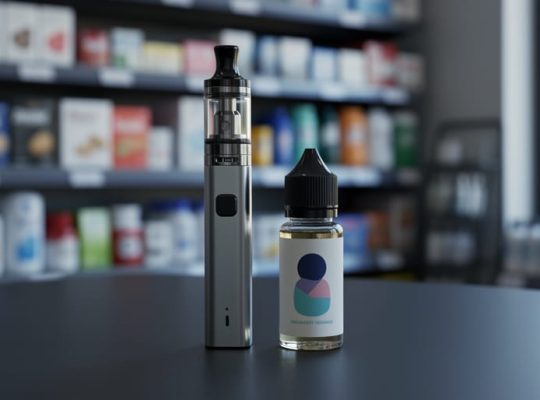
Understanding Canada’s vaping regulations protects your access to products while keeping you compliant with federal and provincial laws. Check your provincial government website monthly for regulation updates, as requirements for product availability, flavour restrictions, and purchasing locations change frequently across different regions. Verify that any vaping product you purchase displays Health Canada’s required warning labels and nicotine concentration information—products without proper labeling are illegal and potentially unsafe.
Know that federal law prohibits vaping product sales to anyone under 18, while some provinces set the minimum age at 19, affecting where and how you can legally purchase products. Register with retailers who maintain email lists about regulatory changes, ensuring you receive immediate notifications when laws affecting your preferred products or purchasing methods are updated. Request receipts for all purchases and store them digitally, creating a compliance record that protects you if questions arise about where or when you obtained specific products.
Provincial regulations differ dramatically on flavour availability, nicotine concentration limits, and where you can legally vape in public spaces. Before traveling within Canada, research your destination province’s specific rules to avoid unintentional violations that result in fines or product confiscation. Join provincial vaping advocacy groups that monitor regulatory proposals and provide members with plain-language summaries of complex legal changes before they take effect.
The regulatory landscape continues shifting as Health Canada balances public health objectives with supporting adults seeking smoking alternatives. Staying informed transforms confusing legal requirements into straightforward practices that protect your transition journey. This comprehensive guide breaks down federal and provincial regulations into actionable information, helping you navigate the legal framework while maintaining access to the products supporting your smoke-free goals.
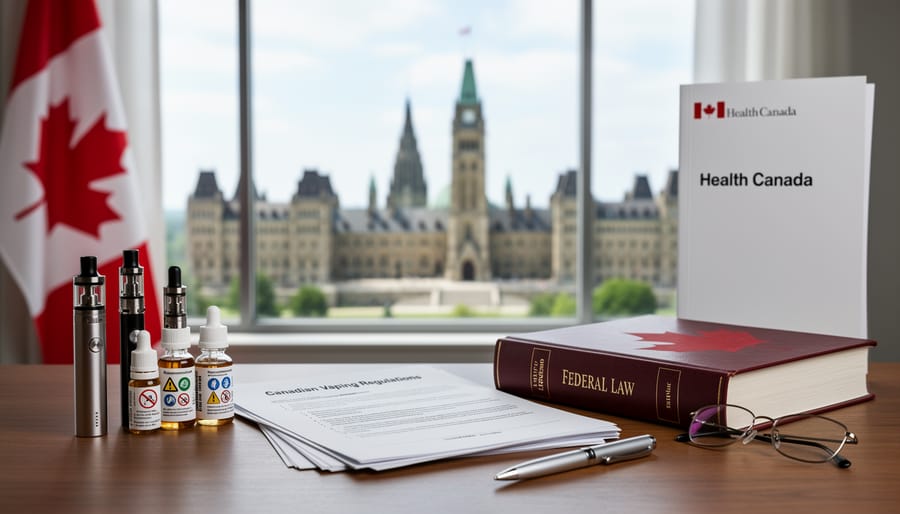
The Current State of Vaping Regulations in Canada
Federal Laws: What You Need to Know
Understanding federal regulations doesn’t have to be complicated. Health Canada oversees vaping products through the Tobacco and Vaping Products Act, designed to protect public health while recognizing vaping as a less harmful alternative for adult smokers making the transition.
Product standards form the foundation of these regulations. All vaping products sold in Canada must meet specific safety requirements. This means the e-liquids you purchase have passed rigorous testing for quality and consistency. Nicotine concentrations are capped at 20 mg/mL, ensuring products remain appropriate for adult use while supporting your journey away from traditional cigarettes.
Packaging requirements serve your safety too. Child-resistant containers are mandatory, and products must display clear nicotine warnings and ingredient lists. Think of these measures as your assurance that what you’re buying meets legitimate safety standards. When Sarah from Vancouver switched to vaping last year, she appreciated knowing exactly what was in her products, something she never had with cigarettes.
Labeling rules require plain language health warnings and prohibit any claims suggesting vaping products are safe or beneficial to health. While this might seem restrictive, it ensures you receive honest information to make informed choices.
Advertising restrictions prevent promotion to youth and limit where vaping products can be marketed. You won’t see vaping ads on television or billboards, and promotional activities in retail spaces face strict guidelines. These boundaries protect younger Canadians while ensuring adults like you can still access the information needed to make your transition successfully.
Provincial Variations That Affect Where and How You Vape
Canada’s vaping landscape looks quite different depending on which province you call home, and understanding these variations is essential for making informed choices as you transition away from smoking.
Age restrictions vary nationally, with most provinces setting the minimum at 18 or 19, matching their legal smoking age. When planning travel or relocating, verify your province’s specific requirements to stay compliant.
Flavour regulations represent one of the most significant provincial differences. Some provinces have implemented comprehensive flavour bans beyond the federal menthol restriction, limiting available options to tobacco and mint flavours in certain retail settings. Others maintain broader flavour availability, particularly in specialty vape shops. This directly impacts your ability to find flavours that help you stay smoke-free. Many who’ve successfully quit smoking credit finding the right flavour as crucial to their journey, so understanding local options matters.
Retail regulations also differ considerably. Some provinces restrict vape product sales to specialized retailers, while others permit sales in convenience stores. Display restrictions, packaging requirements, and online sales rules vary too, affecting how easily you can access products.
Public vaping rules mirror this provincial patchwork. While federal law prohibits vaping where minors gather, provinces add their own restrictions. Some ban vaping anywhere smoking is prohibited, including restaurant patios, parks, and near building entrances. Others maintain more flexible approaches.
Before purchasing or vaping in public spaces, familiarize yourself with your provincial regulations. Local vape shops often provide excellent guidance on navigating these rules while supporting your smoke-free goals.
Recent Changes That Impact Your Vaping Experience
The vaping landscape in Canada has evolved significantly over the past year, and staying informed about these changes can help you make confident decisions on your smoke-free journey. While change can feel overwhelming, understanding what’s new ensures you remain compliant while accessing the products that work best for your transition.
One of the most significant recent shifts involves flavour restrictions. Many provinces have implemented or proposed limitations on flavoured vaping products, particularly those considered appealing to youth. In several jurisdictions, you’ll now find that fruit, dessert, and candy-flavoured options are restricted or only available in specialized vape shops rather than convenience stores. This means planning your purchases accordingly and exploring tobacco and mint alternatives that remain widely available. Sarah, who successfully quit smoking after 15 years, shares her perspective: “When my favourite flavour became harder to find, I worried I’d struggle. But connecting with my local vape shop helped me discover new options I actually prefer now.”
Nicotine concentration limits have also seen adjustments across the country. Current regulations cap nicotine concentration at 20 mg/mL for most vaping products, though some provinces are considering further restrictions. If you’re using vaping to manage nicotine cravings as you transition from cigarettes, this regulation actually encourages a gradual reduction approach, which many health professionals view positively. Working with knowledgeable retailers can help you find the right strength for your needs within these parameters.
Packaging requirements have become more stringent as well. You’ll notice child-resistant packaging, clearer health warnings, and more detailed ingredient listings on products. While these changes might make packages less visually appealing, they provide valuable information that empowers you to make informed choices about what you’re using.
Industry expert Michael Chen, a regulatory compliance specialist, notes: “These changes reflect a maturing market focused on adult smokers seeking alternatives. While adaptation takes time, most users find they can still access effective products that support their smoke-free goals.”
The key is staying connected with reputable retailers who understand these regulations and can guide you through your options. Your transition away from combustible tobacco remains achievable and supported, even as the regulatory environment continues evolving.
Why These Regulations Exist (And What They Mean for Your Health Journey)
Understanding the reasoning behind vaping regulations can help you navigate this landscape more confidently, even when the rules feel restrictive. At their core, these regulations emerged from genuine public health concerns, particularly the alarming rise in youth vaping rates that emerged in the late 2010s. Health Canada and provincial governments responded to data showing increased nicotine use among teenagers, prompting swift regulatory action.
The government’s primary stated objectives focus on three areas: preventing youth access to vaping products, ensuring product safety and quality standards, and reducing the normalization of vaping in public spaces. These aren’t arbitrary restrictions. They stem from legitimate worries about developing brains and nicotine addiction in young people who have never smoked.
However, here’s where the conversation gets more nuanced for your health journey. While protecting youth is undeniably important, many regulations impact adults like you who are using vaping as a tool to move away from combustible cigarettes. Flavor restrictions, for instance, were designed to reduce youth appeal, but many adults find that flavored options help them stay smoke-free more successfully than tobacco flavors alone.
Marketing and packaging regulations also reflect this youth-protection focus, limiting how companies can communicate product benefits even to their intended adult audience. Display restrictions at retail locations were implemented to reduce visibility to young people, though they can make it harder for adults to make informed purchasing decisions.
The challenge lies in balancing these competing interests. Dr. Sarah Chen, a public health researcher we interviewed, explained: “Regulations need to walk a fine line between discouraging youth initiation while ensuring adults seeking harm reduction alternatives aren’t pushed back toward smoking.”
What this means for you is that while navigating regulations might feel cumbersome, understanding their purpose helps you work within the system effectively. Your commitment to transitioning from smoking remains valid and important, regardless of regulatory complexity. The key is staying informed about requirements in your jurisdiction while focusing on your personal health goals.
How Regulations Affect Product Availability and Your Options
Flavour Restrictions: What’s Still Available
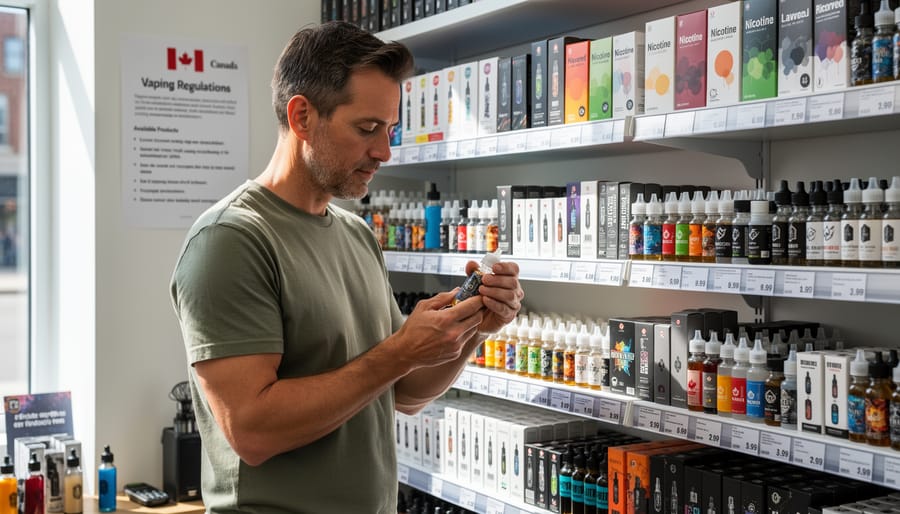
Canadian flavour restrictions can feel overwhelming at first, but there’s good news: you still have options to support your transition from smoking. Current regulations prohibit most flavoured vaping products in convenience stores and gas stations, but tobacco and mint flavours remain widely available in these locations. Adult-only vape shops continue offering a broader selection, including various flavour profiles that can help you find what works best.
The key is understanding where to shop. Specialty vape retailers—those restricted to 18+ customers—can carry flavours beyond tobacco and mint, though this varies by province. British Columbia, Ontario, and Nova Scotia have implemented more restrictive flavour bans, while other provinces maintain more options for adult consumers.
Jennifer, a former pack-a-day smoker from Alberta, shared her experience: “When I heard about flavour bans, I worried I’d lose the products that helped me quit cigarettes. But my local vape shop walked me through what was still available. Finding a quality tobacco flavour made all the difference in those first weeks.”
Industry expert Marcus Chen advises, “Don’t get discouraged. Work with knowledgeable retailers who understand transitioning from smoking. They can recommend products within current regulations that match your preferences.” The landscape continues evolving, but with patience and the right guidance, you’ll find suitable alternatives that support your smoke-free journey.
Nicotine Strength Limits and Your Quit Journey
In Canada, nicotine concentration in vaping products is capped at 20 mg/mL, a regulation designed to protect public health while keeping effective options available for adults transitioning from cigarettes. If you’re making the switch, understanding this limit helps you choose products that satisfy cravings without frustration.
Many former smokers initially worry that 20 mg/mL won’t be enough, especially if they smoked heavily. The good news? This strength level works effectively for most people when paired with the right device. Pod systems and mouth-to-lung devices deliver nicotine more efficiently than older models, meaning you can achieve satisfaction within legal limits.
Sarah, a pack-a-day smoker for fifteen years, shared her experience: “I started with 20 mg/mL salt nicotine in a small pod device. Within days, cigarette cravings became manageable. I was surprised how well it worked.”
Industry expert Dr. Michael Chen explains: “The 20 mg/mL cap actually encourages better device selection. Modern pod systems with nicotine salts deliver satisfaction comparable to smoking, making the transition smoother than many expect.”
Start with the maximum legal strength if you’re a heavy smoker, then gradually reduce as your body adapts. This approach respects regulations while supporting your quit journey effectively. Remember, finding the right combination of device and nicotine strength matters more than chasing higher concentrations.
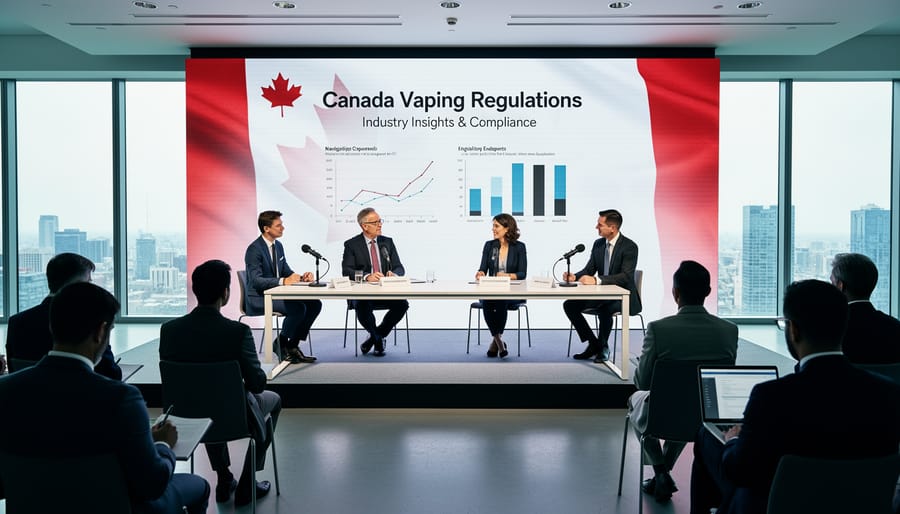
Expert Perspective: Industry Insider on Navigating the Regulatory Landscape
We spoke with Marcus Chen, a regulatory compliance consultant who has worked with vaping retailers across Canada for over eight years, to get his perspective on how the industry is evolving and what it means for people making the switch from smoking.
“The biggest shift I’ve seen is that regulations have actually helped legitimize vaping as a smoking alternative,” Marcus explains. “Yes, businesses had to adapt quickly, but the result is a more transparent industry where consumers can feel confident about what they’re purchasing.”
When asked about how retailers are responding to changing rules, Marcus notes that most reputable businesses have embraced compliance as a competitive advantage. “The companies that invest in staff training and stay ahead of regulatory updates are the ones thriving. They’re not just selling products; they’re educating customers about their choices within the legal framework.”
For individuals transitioning from smoking, Marcus offers practical advice: “Don’t feel overwhelmed by the regulations. They’re designed to protect you. Focus on buying from licensed retailers who can answer your questions and provide proper product information. If a shop seems reluctant to discuss ingredients or can’t show you proper labeling, that’s your signal to shop elsewhere.”
Looking ahead, Marcus anticipates regulations will continue tightening around marketing and accessibility to youth, but he remains optimistic about availability for adult users. “The government recognizes vaping’s role in harm reduction. Future changes will likely refine existing rules rather than restrict access for adults making informed choices.”
His final piece of advice? “Stay curious and connected. Follow reputable industry news sources, ask questions at your local vape shop, and remember that regulations evolve based on research. Being informed means you can adapt confidently to any changes that come your way.”
This perspective reinforces that while navigating regulations requires attention, it doesn’t have to be complicated when you have the right information and support.
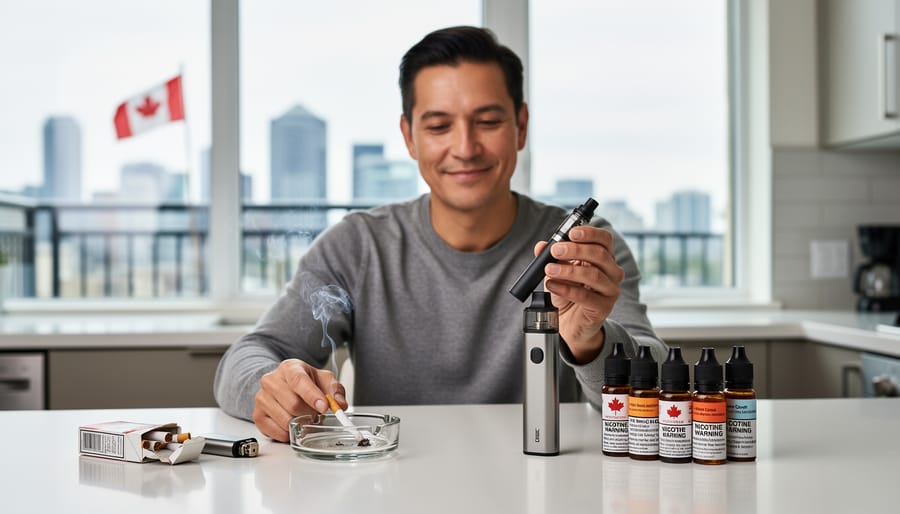
Success Story: Finding Your Path Despite Regulatory Hurdles
When Marcus decided to quit his twenty-year smoking habit, he quickly discovered that navigating Canada’s vaping regulations was almost as challenging as quitting itself. But his story proves that with the right information and approach, the transition is absolutely possible.
“I walked into my first vape shop in Toronto feeling completely overwhelmed,” Marcus shares. “The staff couldn’t advertise products openly, and I had no idea where to start.” Rather than giving up, Marcus did his homework. He researched Health Canada’s approved devices, learned about nicotine concentration limits, and discovered which products were legally available in his province.
The breakthrough came when Marcus connected with a knowledgeable retailer who, while respecting advertising restrictions, could answer his specific questions once he initiated the conversation. “I learned that I needed to be proactive and ask direct questions. The information was there, but the regulations meant retailers couldn’t just hand it to me.”
Marcus started with a basic device that met Canadian safety standards and gradually adjusted his nicotine levels within the legal limits. Within six months, he had completely transitioned away from cigarettes. “The regulations meant I couldn’t impulse buy based on flashy marketing, which actually helped me make more thoughtful choices,” he reflects.
His advice for others? “Don’t let the regulatory landscape intimidate you. Yes, there are restrictions on advertising and product availability, but quality vaping products that can help you quit smoking are still accessible in Canada. Take time to research, ask questions in-store, and remember that these regulations exist to ensure product safety. Your health journey is worth the extra effort to navigate the system properly.”
Staying Compliant: What You Need to Do as a Vaper
Navigating vaping regulations doesn’t have to be complicated. By following a few straightforward practices, you can enjoy your vaping experience while staying on the right side of the law and supporting your journey away from traditional cigarettes.
First and foremost, always purchase your vaping products from licensed retailers. These businesses are authorized to sell regulated products and must follow strict quality and safety standards. Whether you’re shopping online or in-store, legitimate vendors will display their licensing information and only carry products approved for sale in Canada. This simple step protects you from counterfeit or unsafe products while ensuring you’re getting exactly what the label promises.
Take time to understand product labeling. Legal vaping products must include specific information like nicotine content, ingredient lists, and health warnings. Reading these labels helps you make informed choices about what you’re using and ensures you’re selecting products appropriate for your needs. If something seems unclear or the packaging looks suspicious, don’t hesitate to ask questions or choose a different product.
Respecting public vaping restrictions is equally important. Most provinces treat vaping similarly to smoking when it comes to public spaces. Generally, this means avoiding vaping in workplaces, restaurants, near building entrances, and anywhere smoking is prohibited. Many municipalities also restrict vaping in parks and outdoor public areas. When in doubt, look for posted signage or simply ask.
Remember, these regulations exist partly to protect the vaping community and ensure adults like you can continue accessing these products as smoking alternatives. By staying compliant, you’re not just following the law – you’re demonstrating that vapers are responsible individuals making thoughtful health choices. Your actions help shape public perception and contribute to keeping vaping accessible for everyone on this journey toward a smoke-free life.
What’s Coming Next: Proposed Changes and How to Stay Informed
The vaping landscape continues to evolve, and staying informed about upcoming changes helps you maintain access to the products that support your smoke-free journey. Health Canada regularly reviews and updates regulations based on emerging research and public health data, so what’s current today may shift tomorrow.
Several regulatory discussions are currently underway. The federal government periodically revisits flavour restrictions, nicotine concentration limits, and advertising standards. Provincial and territorial governments also conduct their own consultations, which can result in regional regulatory changes that affect product availability and where you can vape.
To stay ahead of these changes, bookmark Health Canada’s tobacco and vaping product pages and sign yourself up for their email updates. Follow your provincial health department’s announcements as well. Many vaping advocacy groups, like Rights 4 Vapers, provide timely alerts about regulatory consultations and proposed legislation. These organizations often simplify complex legal language, making it easier to understand how changes might affect you personally.
Here’s something important: public consultations aren’t just formalities. Your voice matters. When Health Canada or your provincial government opens a consultation period, consider participating. Share your story about how vaping helped you quit smoking. Decision-makers need to hear from real people, not just lobbyists and special interest groups.
Setting aside just ten minutes monthly to check for regulatory updates keeps you informed without overwhelming you. Think of it as maintaining your commitment to a healthier lifestyle—you’ve already made the harder choice by quitting smoking, and staying informed simply protects that investment in yourself.
Understanding vaping regulations isn’t just about staying on the right side of the law—it’s about empowering yourself to make informed decisions on your health journey. As you navigate the transition from smoking to vaping, knowing the regulatory landscape helps you choose quality products, access reliable information, and protect your progress toward a smoke-free life.
The regulations we’ve explored throughout this article exist to ensure product safety, maintain quality standards, and provide you with transparent information about what you’re using. While the framework may sometimes feel restrictive, these guidelines ultimately work in your favor, helping you avoid substandard products and make choices backed by accountability and oversight.
Your decision to explore vaping as a smoking alternative is deeply personal, and staying educated about the evolving regulatory environment is part of taking control of that journey. Regulations will continue to develop as research advances and the industry matures, so keeping yourself informed positions you to adapt confidently to any changes ahead.
At Happy Vaper, we’re committed to being your ongoing resource—providing updates, sharing success stories, and connecting you with the information you need to support your goals. Remember, every step you take toward understanding your options is a step toward better health outcomes. You’ve already shown courage by choosing to transition away from smoking. Now, equipped with knowledge about the regulatory framework supporting your choice, you’re even better prepared to succeed on your terms.